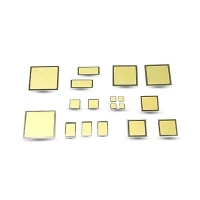

What Are Advanced Ceramics?
Advanced ceramics are a class of high-performance inorganic non-metallic materials produced through processes such as material composition design, powder processing, forming, and sintering. Unlike traditional ceramics, which are primarily used in areas such as household tableware and architectural decoration, advanced ceramics are typically designed to deliver specific mechanical, thermal, electrical, or chemical properties and are widely used in fields such as semiconductors, electronic devices, precision instruments, medical devices, energy systems, and industrial equipment.
The development of advanced ceramics is closely linked to advances in materials science and industrial technology. In the early 20th century, with the growth of the electrical industry, ceramic materials such as alumina gradually found applications in electrical insulation.In the mid-20th century, high-temperature industries and the machinery manufacturing sector drove the research and application of structural ceramics such as silicon carbide and silicon nitride. By the late 20th century, with the development of the electronics industry and semiconductor technology, advanced ceramics found further applications in electronic components, ceramic substrates, and precision equipment parts. Since the beginning of the 21st century, their applications have continued to expand in fields such as semiconductor manufacturing, electronic packaging, and industrial precision components.
The properties of advanced ceramics primarily depend on the material's chemical composition, crystal structure, purity, porosity, grain size, and manufacturing process. For example, alumina ceramics possess excellent electrical insulation and wear resistance; aluminum nitride ceramics exhibit high thermal conductivity; and silicon carbide ceramics demonstrate superior high-temperature strength, hardness, and wear resistance.
In terms of typical material parameters, common alumina ceramics have a Vickers hardness of approximately 12–20 GPa, while aluminum nitride ceramics can achieve a thermal conductivity of about 140–180 W/(m·K); specific values vary depending on the material grade, purity, and manufacturing process. These parameters help engineers make preliminary comparisons of different materials' performance but should not be used as the sole basis for material selection.
These differences in material properties enable advanced ceramics to meet the material requirements of various industrial applications. For equipment manufacturers, selecting the appropriate advanced ceramic requires not only considering the material's inherent properties but also comprehensively evaluating component structure, machining precision, assembly methods, and actual operating conditions.
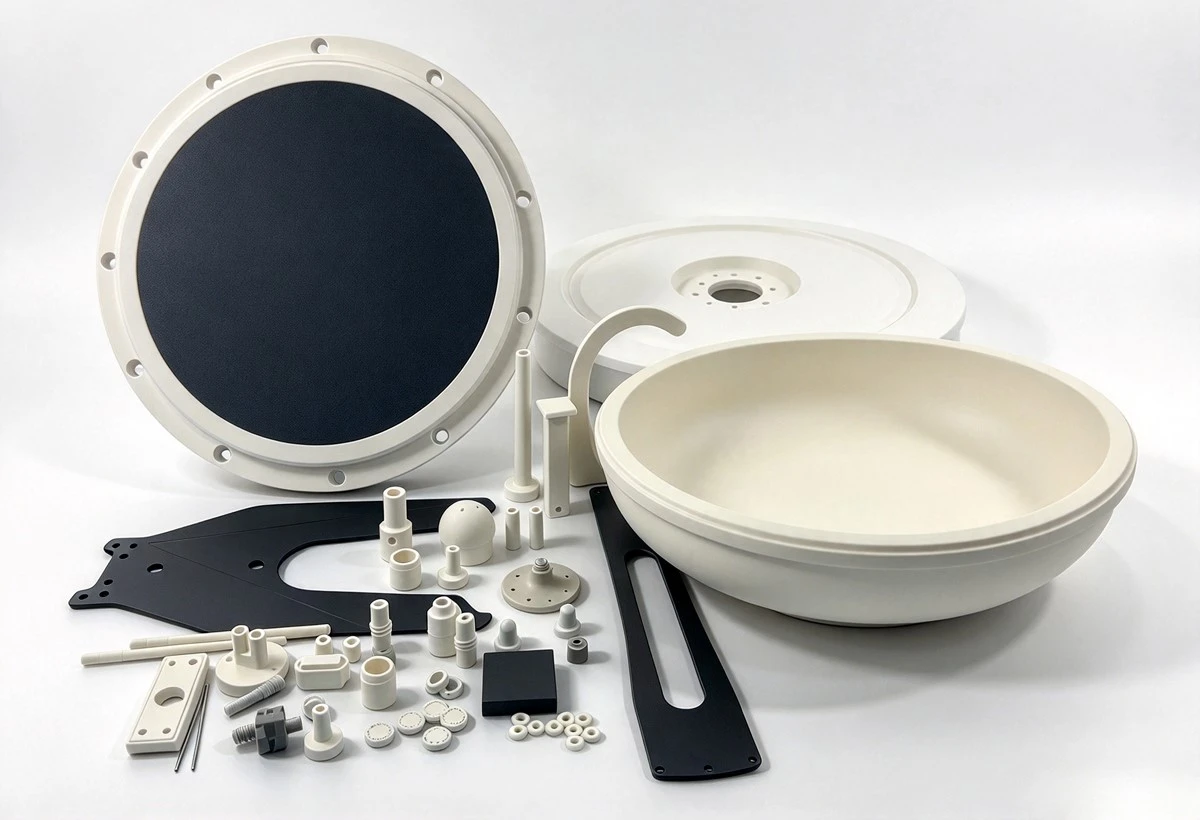
Types of Advanced Ceramic Materials
Advanced ceramics encompass a wide range of material systems, with different types emphasizing distinct aspects such as mechanical properties, thermal conductivity, electrical characteristics, and chemical stability. Understanding the characteristics of common materials helps narrow down the selection range and provides a reference for subsequent component design and supplier evaluation.
Oxide Ceramics
Oxide ceramics consist primarily of compounds formed by metal elements and oxygen. Common materials include aluminum oxide (Al₂O₃), zirconia (ZrO₂), and yttria (Y₂O₃). These materials offer distinct advantages in applications requiring electrical insulation, wear resistance, heat resistance, and resistance to specific chemical environments.
- Alumina Ceramics: Alumina offers excellent electrical insulation, hardness, and wear resistance, along with a certain degree of chemical corrosion resistance.Common high-purity alumina ceramics have a Vickers hardness of approximately 12–20 GPa and a thermal conductivity typically ranging from 20 to 30 W/(m·K), with specific values depending on alumina content, microstructure, and manufacturing processes. Consequently, alumina is frequently used in insulating components, precision structural parts, ceramic tubes, ceramic rings, and semiconductor equipment components.
- Zirconia Ceramics: Zirconia possesses high fracture toughness and, compared to many other structural ceramics, offers certain advantages in terms of crack propagation resistance. Taking common yttrium-stabilized zirconia as an example, its fracture toughness is typically around 5–10 MPa·m½, depending on the stabilizer content, grain structure, and testing method.Some zirconia materials also exhibit good wear resistance, making them suitable for precision bushings, seals, wear-resistant components, and certain medical device components.
- Yttria Ceramics: Yttria exhibits good high-temperature resistance and demonstrates favorable corrosion resistance in specific plasma environments; therefore, it can be used for chamber linings, protective components, and other precision assemblies in semiconductor manufacturing equipment. Its actual performance depends on material purity, microstructure, manufacturing processes, and the specific process environment.For semiconductor equipment applications, the suitability of the material must also be evaluated in conjunction with the type of plasma gas, ion bombardment conditions, and surface state.
The properties and suitable applications of different oxide ceramics vary; material selection should be evaluated based on operating temperature, chemical media, plasma conditions, and the specific function of the component.
Nitride Ceramics
Nitride ceramics consist primarily of nitrogen compounds; common materials include aluminum nitride (AlN), silicon nitride (Si₃N₄), and boron nitride (BN). These materials offer distinct application benefits in electronic thermal management, mechanical engineering, and high-temperature industrial sectors.
- Aluminum Nitride Ceramics: Aluminum nitride possesses high thermal conductivity and good electrical insulation, making it suitable for electronic packaging substrates, power module substrates, ceramic heat dissipation components, and related precision assemblies that require both heat dissipation and electrical isolation. The thermal conductivity of common electronic-grade aluminum nitride ceramics is approximately 140–180 W/(m·K), with certain specific grades potentially reaching even higher levels.Its actual thermal conductivity is influenced by material purity, sintering aids, microstructure, and manufacturing processes.
- Silicon nitride ceramics: Silicon nitride possesses good thermal shock resistance, mechanical strength, and wear resistance, making it valuable for industrial components subjected to mechanical loads or temperature fluctuations.The fracture toughness of common silicon nitride ceramics is approximately 5–10 MPa·m½, with specific values depending on material composition and manufacturing processes. Common applications include bearing rolling elements, wear-resistant structural parts, mechanical seal components, and certain high-temperature equipment parts.
- Boron Nitride Ceramics: Due to its unique electrical and thermal properties, boron nitride is used in high-temperature insulating components, molten metal handling assemblies, and specific industrial equipment.Different crystal forms of boron nitride exhibit significant differences in hardness, thermal conductivity, and machinability; for example, hexagonal boron nitride has better machinability, while cubic boron nitride has higher hardness. Therefore, material selection must be based on the specific application.
Carbide Ceramics
Carbide ceramics consist primarily of compounds formed by carbon and other elements; common materials include silicon carbide (SiC) and boron carbide (B₄C). Some carbides exhibit high hardness, good wear resistance, and properties suitable for high-temperature environments.
- Silicon Carbide Ceramics: Silicon carbide possesses good high-temperature strength, thermal conductivity, and wear resistance, and exhibits good chemical stability in a variety of corrosive media. However, its corrosion resistance still depends on the specific medium, temperature, concentration, and material preparation method. The thermal conductivity of common silicon carbide ceramics ranges from approximately 80 to 200 W/(m·K), with significant variations resulting from different sintering methods, porosity, and material grades.Silicon carbide is commonly used in mechanical seal rings, pump components, wear-resistant liners, heat exchange components, and high-temperature industrial equipment.
- Boron carbide ceramics: Boron carbide possesses high hardness and low density, with a theoretical density of approximately 2.52 g/cm³ and a Vickers hardness ranging from about 30 to 38 GPa, depending on material quality and testing conditions.It is suitable for wear-resistant components, abrasives, and certain protective structures. Because its fracture toughness and machining characteristics differ from those of other ceramic materials, the actual stress patterns and operating conditions must be considered in the design of structural components.
Compared to oxide ceramics, some carbide ceramics offer application advantages under high temperatures, wear, or specific chemical environments; however, their forming, sintering, and precision machining typically require corresponding process conditions.
Comparison of Common Advanced Ceramic Materials
|
Ceramic Materials |
Performance Characteristics |
Typical Applications |
|
Alumina (Al₂O₃) |
High hardness, with good electrical insulation, wear resistance, and chemical stability |
Electrical insulation components, ceramic tubes, ceramic rings, precision structural parts |
|
Zirconia (ZrO₂) |
Relatively high fracture toughness, good wear resistance; some grades have low thermal conductivity |
Wear-resistant parts, precision structural components, mechanical assemblies |
|
Yttrium oxide (Y₂O₃) |
Resistant to specific corrosive environments; has a high melting point |
Specific semiconductor equipment components, corrosion-resistant coatings, and functional materials |
|
Aluminum nitride (AlN) |
High thermal conductivity combined with electrical insulation |
Heat-dissipating substrates, thermal management components, and electronic packaging |
|
Silicon nitride (Si₃N₄) |
Good fracture toughness, with excellent wear resistance and thermal shock resistance |
Bearings, wear-resistant parts, precision mechanical components |
|
Boron nitride (BN) |
Good high-temperature resistance, electrical insulation, and thermal stability |
High-temperature insulating components, thermal management components, molten metal handling components, and specialized industrial components |
|
Silicon carbide (SiC) |
High hardness, with excellent wear resistance, thermal conductivity, and high-temperature performance |
High-temperature components, wear-resistant parts, and semiconductor equipment components |
|
Boron carbide (B₄C) |
Extremely high hardness and low density, but relatively limited fracture toughness |
Wear-resistant materials, lightweight protective materials, specialized industrial components |
Advanced Ceramics vs. Traditional Ceramics
Advanced ceramics and traditional ceramics share commonalities in their fundamental material properties, but they typically differ in terms of raw material control, manufacturing processes, performance design, and application requirements.
Traditional ceramics are often based on natural mineral raw materials, and their applications include building materials, household goods, and decorative items.
Advanced ceramics, on the other hand, typically use selected or synthetic powders and are designed to meet specific engineering requirements through composition control, forming, sintering, and subsequent processing.
The distinction between the two does not imply that traditional ceramics lack technical sophistication; rather, it reflects differences in product design objectives, performance metrics, and quality evaluation methods.
|
VS |
Traditional Ceramics |
Advanced Ceramics |
|
Raw Material Selection |
Common natural minerals and traditional ceramic raw materials |
High-purity powders, synthetic powders, or specially treated raw materials |
|
Material Design |
Focus on product forming, appearance, and general performance |
Design based on mechanical, thermal, electrical, or chemical requirements |
|
Manufacturing Processes |
Common forming, drying, sintering, and surface treatment processes |
May involve fine powder processing, precision molding, atmosphere-controlled sintering, and precision machining |
|
Performance Requirements |
Defined based on applications in daily life, construction, or decoration |
Typically evaluated based on specific operating conditions and engineering specifications |
|
Dimensions and Tolerances |
Determined based on the product's intended use |
Precision components may involve strict requirements for dimensions, tolerances, flatness, or surface roughness |
|
Typical Applications |
Tableware, sanitaryware, and architectural ceramics |
Semiconductor equipment, electronic packaging, precision machinery, energy, and medical devices |
It should be noted that advanced ceramics do not achieve ideal performance solely through the use of high-purity raw materials. Powder dispersion, forming uniformity, the sintering process, control of internal defects, and post-processing quality can all affect the actual performance of the final components.
For manufacturers of precision equipment, matching material properties with part design, machining tolerances, and assembly requirements is often more practical than simply comparing individual material parameters.
How Are Advanced Ceramics Manufactured?
The manufacturing process for advanced ceramics typically includes powder preparation , spray granulation, powder molding, green body machining, high-temperature sintering, performance testing, precision machining and surface treatment, quality inspection, and cleanroom packaging. The specific process depends on the material system, component shape, dimensional requirements, and target performance.

Raw Materials Preparation and Powder Molding Treatment
The manufacturing process typically begins with the selection and processing of ceramic powders. The chemical composition, purity, particle size distribution, and impurity content of the raw materials can affect subsequent forming and sintering.
Depending on the material system and product requirements, the manufacturing process may involve mixing, ball milling, granulation, or the addition of appropriate forming aids. For precision ceramic components, powder uniformity and impurity control help reduce the risk of internal defects and improve performance consistency across batches.
Powder Molding and Green Body Processing
Forming processes are used to shape ceramic powders into the desired initial form. Common methods include dry pressing, isostatic pressing, injection molding, cast film forming, and extrusion.
Different forming methods are suitable for different product structures. For example, dry pressing is commonly used for parts with relatively regular shapes; isostatic pressing can be used for products requiring improved green density distribution; tape casting is often used for thin ceramic substrates; and extrusion molding is suitable for certain tubular or elongated components.
At this stage, the product structure, variations in wall thickness, the direction of forming, and the density distribution of the green body can all affect subsequent sintering shrinkage and dimensional control.
High-Temperature Sintering
Sintering is one of the key processes in the manufacturing of advanced ceramics. It typically involves heating ceramic green bodies under specific temperature and process conditions to form bonds between particles and gradually achieve the desired density and microstructure. Different ceramic materials and product requirements call for corresponding sintering methods.
Common sintering methods for advanced ceramics include:
- Atmospheric Sintering: Sintering performed without applying external mechanical pressure.
- Hot-press sintering: Sintering performed while applying uniaxial pressure during the heating process to promote densification of the material.
- Hot isostatic pressing (HIP): Utilizes high temperatures and gas-based isostatic pressure to promote densification or reduce internal porosity.
- Discharge plasma sintering: Rapid densification is achieved through the synergistic action of pulsed current and pressure.
- Microwave sintering: Heats the material using microwave energy.
- Reaction sintering: Forms the desired ceramic structure through chemical reactions between the material components.
Different sintering methods vary in terms of densification effectiveness, grain control, production efficiency, and suitable materials; the specific process must be selected based on the composition of the ceramic material, the component structure, and performance requirements.
Precision Machining and Surface Treatment
Sintered ceramic components may require grinding, polishing, drilling, cutting, or other precision machining to meet requirements for assembly dimensions, flatness, surface roughness, and functional structures.
Ceramics typically have high hardness and low plastic deformation capacity; therefore, cutting or grinding parameters must be controlled during machining, and attention must be paid to issues such as microcracks, chipping, and surface damage. For thin-walled, slender, or complex-structured components, the clamping method and stress distribution during machining must also be considered.
Certain products also require metallization, coating, or other surface treatments to meet requirements for welding, electrical conductivity, wear resistance, or specific interface bonding.
Quality Inspection
Quality inspection is typically based on product drawings, technical specifications, and application requirements. Inspection items may include dimensional tolerances, surface roughness, cosmetic defects, material density, mechanical properties, electrical properties, and thermal properties.
For semiconductor equipment or electronic packaging applications, testing requirements may also involve flatness, insulation performance, thermal conductivity, metallization layer quality, and assembly interface dimensions.
Not every ceramic product requires the same set of inspection items. A sound quality control program should be developed based on material type, product function, and customer technical requirements, and should clearly define relevant test methods and acceptance criteria.
Major Applications of Advanced Ceramics
The range of applications for advanced ceramics is closely related to their material properties. From precision machinery to electronic packaging, different ceramic materials perform distinct functions within equipment.
- Semiconductors and Electronic Equipment: Advanced ceramics can be used in semiconductor manufacturing equipment, electronic components, and related precision systems. Common products include ceramic parts, ceramic packages, and electronic functional components.
- Medical Devices: Certain advanced ceramic materials possess excellent biocompatibility, wear resistance, or chemical stability and can be used in specific medical devices, diagnostic equipment, and related precision components; specific applications depend on the material type and usage requirements.
- FPD/LED: Advanced ceramics can be used in flat-panel display and LED manufacturing equipment for precision structural parts, support components, and related functional assemblies, meeting specific thermal, electrical, or mechanical performance requirements.
- Equipment and Machinery: In industrial equipment and mechanical systems, advanced ceramics can be used for wear-resistant parts, sealing assemblies, insulating components, and other precision structural parts, making them suitable for operating environments with specific material performance requirements.
- Oil and Chemicals: Certain advanced ceramics possess excellent wear resistance and resistance to specific chemical media, making them suitable for pump and valve components, sealing assemblies, and other industrial parts. Actual material selection must take into account conditions such as the composition of the medium, temperature, and pressure.
- Automotive and Transportation: Advanced ceramics can be used in sensors, electronic systems, wear-resistant components, and certain high-temperature operating parts; specific applications depend on material properties and product design.
- Energy and Power: In energy equipment and power systems, advanced ceramics can be used for electrical insulation, thermal management, and high-temperature-resistant components to meet various equipment design requirements.
- Food and Agriculture: Certain advanced ceramics can be used for wear-resistant or corrosion-resistant components in food processing equipment, fluid conveyance systems, and agricultural machinery. Material selection must take into account the working medium, cleaning requirements, and relevant industry standards.
Why Are Advanced Ceramics Used in Semiconductor Equipment?
Semiconductor manufacturing equipment typically requires wafer handling, positioning, clamping, and other processing operations to be performed under precisely controlled conditions. Components within the equipment must not only meet dimensional and structural requirements but may also face challenges such as wear, temperature fluctuations, electrical insulation, or specific chemical environments. Thanks to their diverse material properties, advanced ceramics have become a key material choice for certain components in semiconductor equipment.

Wear Resistance and Dimensional Stability
In wafer handling and positioning systems, certain ceramic components undergo repetitive motion or come into contact with other parts. Materials such as alumina and silicon nitride possess high hardness and wear resistance, making them suitable for precision components that meet specific material and structural requirements. Actual performance also depends on the nature of contact, applied loads, surface condition, and the operating environment.
Thermal Management and Temperature Adaptability
Some semiconductor equipment requires controlling temperature fluctuations in components or conducting heat. Aluminum nitride has high thermal conductivity while also possessing electrical insulation properties, making it suitable for certain components that require both heat dissipation and insulation. Silicon carbide, due to its thermal properties and high-temperature resistance, is suitable for equipment structures with specific thermal performance requirements. The specific material selection still requires evaluation based on operating temperature, thermal load, and design requirements.
Electrical Insulation and Chemical Environment Compatibility
In equipment structures requiring electrical insulation, ceramic materials such as alumina are valuable. For components that may come into contact with specific process gases or chemical media, or that require contamination control, material selection must consider material purity, chemical compatibility, surface condition, and actual process conditions. Ceramic materials do not exhibit the same level of resistance to all chemical media.
The Role of Precision Ceramic Components
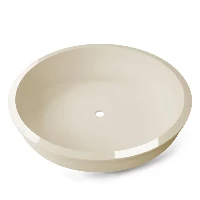
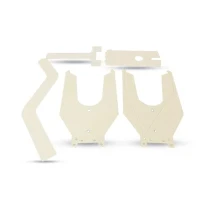
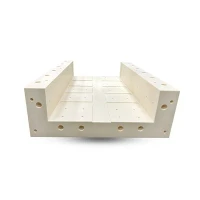
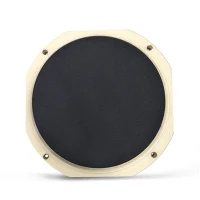
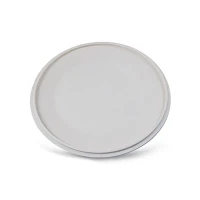
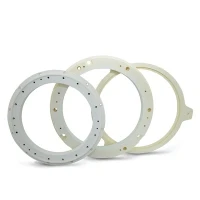
Common products in semiconductor equipment include ceramic rings, ceramic discs, ceramic guide rails, wafer suction cups, nozzles, ceramic arms, and custom ceramic structural components. Design requirements vary by component: some prioritize dimensional tolerances and surface quality, while others must balance thermal performance, electrical properties, or wear resistance. Therefore, material selection typically requires consideration of the part's structure, machining requirements, and equipment operating conditions.
For semiconductor equipment projects, selecting advanced ceramics involves not only comparing the inherent properties of the materials but also evaluating the component's structural design, dimensional accuracy, surface requirements, and actual operating conditions. Tessvida provides integrated R&D and manufacturing services tailored to these needs, enabling collaborative evaluation of suitable ceramic materials and component solutions based on project specifications.
How to Select the Right Advanced Ceramics for a Project?
When selecting advanced ceramics, the material name serves only as a preliminary screening criterion. For projects requiring custom structural parts or precision assemblies, the operating environment, mechanical loads, dimensional requirements, and manufacturing feasibility must also be factored into the evaluation.
Define the Component's Primary Function
First, determine the role of the ceramic component within the equipment. For example, is it intended for electrical insulation, heat transfer, wear-resistant contact, precision positioning, or withstanding specific chemical environments?
If the primary requirement is electrical insulation, materials such as alumina or aluminum nitride should be prioritized; if high thermal conductivity is needed alongside electrical insulation, aluminum nitride may be worth considering first; if the component must withstand wear or specific corrosive environments, silicon carbide, alumina, and other suitable materials can be further compared.
This preliminary screening helps reduce unnecessary material comparisons, but the final selection must still be based on specific operating conditions and technical data.
Evaluating Operating Temperatures and Thermal Conditions
The high-temperature suitability of ceramic materials depends not only on their melting point or nominal temperature range but also on mechanical loads, thermal cycling, atmosphere, thermal expansion, and thermal conductivity.
For example, in equipment subject to rapid temperature changes, the coefficient of thermal expansion and thermal shock resistance may be particularly important; for electronic heat dissipation components, the focus should be on thermal conductivity, interfacial thermal resistance, and mounting configurations.
Therefore, material evaluation should, as much as possible, be based on actual operating temperatures, heating and cooling rates, and thermal cycling conditions, rather than a simple comparison of the material's theoretical temperature resistance data.
Confirm Dimensions, Tolerances, and Surface Requirements
For precision ceramic parts, drawing specifications directly influence the forming method, sintering shrinkage control, and post-processing techniques.
Early in the project, it is recommended to clearly define critical dimensions, tolerances, flatness, concentricity, hole placement requirements, and surface roughness. For ceramic rings, discs, tubular components, and complex structural parts, attention must also be paid to design factors such as wall thickness, edge geometry, holes, and localized stress concentrations.
Appropriate tolerance settings help strike a balance between assembly accuracy, product functionality, and manufacturing costs. Not all dimensions require the same level of precision; the key is to distinguish between functional dimensions and non-critical dimensions.
Consider Material Compatibility with Other Components
Ceramic components typically need to function in conjunction with metals, polymers, or other materials. In such cases, differences in thermal expansion, contact stress, joining methods, and assembly clearances can all affect system performance.
For example, when joining ceramics to metals, the differences in dimensional changes between the two materials under temperature variations must be considered; when ceramics are in an interference fit with other components, assembly stresses and the ceramic's crack resistance must be evaluated.
If the part is used in electronic packaging, the compatibility between the ceramic substrate, metallization layer, solder, and other bonding materials must also be evaluated.
Evaluating Manufacturing, Testing, and Supply Conditions
For custom ceramic projects, the design must not only meet performance requirements but also take into account the feasibility of the manufacturing process.
Project evaluation can be conducted from the following perspectives:
- Material Options: Verify the performance data, specifications, and supply conditions of candidate materials.
- Structural manufacturability: Evaluate the impact of part geometry, wall thickness, hole placement, and complex structures on forming and machining.
- Quality Inspection: Define critical dimensions, material properties, cosmetic defects, and other acceptance criteria.
- Batch Consistency: Understand how raw materials, process controls, and inspection records are managed.
- Delivery and Supply Coordination: Evaluate sample development, design changes, the transition to mass production, and subsequent replenishment requirements.
For projects requiring multiple ceramic parts or ceramic-metal hybrid assemblies, clarifying material, drawing, inspection, and delivery requirements early on helps reduce communication costs between the design and supply chains.
Conclusion
Advanced ceramic projects typically involve multiple stages, including material selection, structural design, precision manufacturing, and quality inspection. For manufacturers of semiconductor equipment, electronic packaging, and industrial precision components, effectively aligning R&D requirements with manufacturing and supply processes helps drive the implementation of custom component projects.
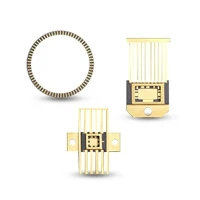
Tessvida provides industrial customers with advanced materials, precision ceramic components, HTCC ceramic packaging housings, precious metal materials, and related products, while offering coordinated R&D and manufacturing supply services tailored to customer project needs.
Whether you are evaluating ceramic materials such as alumina, aluminum nitride, or silicon carbide, or require custom ceramic rings, discs, tubular components, insulating assemblies, or ceramic packaging products, you can submit product drawings, material specifications, operating environments, and relevant technical parameters to Tessvida for further discussion regarding suitable material selections and supply solutions.
Contact Tessvida to discuss your advanced ceramics project needs and explore collaborative solutions that align with your product design, manufacturing requirements, and supply plans.
FAQ
Q: What materials are typically included in advanced ceramics?
A: Advanced ceramics typically include oxide ceramics, nitride ceramics, carbide ceramics, and other functional ceramics. Common materials include alumina, zirconia, aluminum nitride, silicon nitride, and silicon carbide. Specific classifications may vary depending on industry standards and application areas.
Q: What are the differences between alumina, aluminum nitride, and silicon carbide ceramics?
A: Alumina ceramics are typically used for electrical insulation, wear resistance, and precision structural components; aluminum nitride ceramics feature high thermal conductivity and electrical insulation, and are commonly used in electronic thermal management and packaging substrates; silicon carbide ceramics are valuable in specific high-temperature, abrasive, and corrosive environments. The suitability of each material must be determined based on specific performance parameters and operating conditions.
Q: Are advanced ceramics suitable for semiconductor equipment?
A: Advanced ceramics are widely used in certain semiconductor manufacturing equipment, including ceramic rings, wafer chucks, ceramic nozzles, insulating components, and precision ceramic structural parts. The selection of specific materials and part designs must take into account process temperatures, chemical environments, dimensional accuracy, surface requirements, and contamination control needs.
Q: Can advanced ceramic components be customized?
A: Advanced ceramic components can be customized according to project requirements. Customization typically involves material type, product shape, dimensional tolerances, hole patterns, surface finish, and specific performance requirements. For complex parts, it is recommended to provide drawings, operating conditions, and key technical specifications early in the project to facilitate the evaluation of materials and manufacturing solutions.
Q: What factors should be considered when selecting an advanced ceramics supplier?
A: When evaluating suppliers, focus on understanding material selection , technical communication capabilities, the manufacturability of customized products, quality inspection procedures, management of drawings and technical documentation, sample development processes, and supply chain coordination capabilities. For projects involving ceramic-metal composites, also pay attention to the bonding methods and interface requirements between the relevant materials.